Warehouse and Distribution Hardware

Hardware for Receiving, Picking, Packing and Shipping

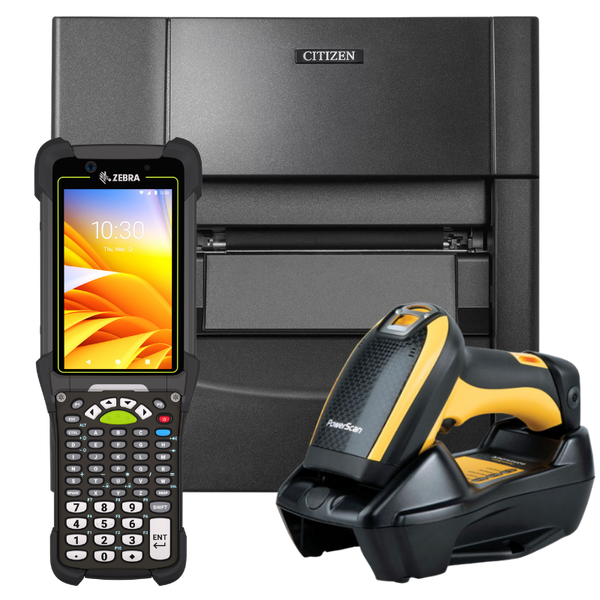
Rugged mobile computers, wearable scanners, vehicle-mounted terminals, industrial label printers and RFID for distribution centres and stockrooms. Specified for the conditions in your building, and checked against the WMS or inventory software running it.

Rugged, Freezer and Long-Range OptionsWearables for High-Volume PickingIndustrial Printing and Matched MediaSoftware Compatibility Confirmed First
Hardware for Receiving, Picking, Packing and Shipping

Every Pallet Moved Is a Data Capture Event

A distribution centre runs on the accuracy of what gets scanned. Every case received, every location put away, every unit picked and every carton shipped is a transaction in your WMS, and the hardware doing the capturing either keeps pace with the building or becomes the thing everyone works around.

That is why warehouse hardware is specified differently from retail hardware. A scanner on a checkout counter is handled gently, in good light, at arm's length. A scanner in a warehouse is dropped from a forklift, used in a freezer, pointed at a damaged label thirty feet up a rack, and expected to last a full shift without a charge.

The cost of getting it wrong is rarely the device. It is the pickers waiting on a battery, the receiving dock falling behind because one scanner cannot read a scuffed carton label, and the stock accuracy that quietly degrades when staff start writing numbers down instead.

Specify for the worst conditions in the building, not the average ones. Hardware is bought once and lived with for five years.

Every Pallet Moved Is a Data Capture Event
6 ft Typical drop rating

Rugged handhelds are specified to survive repeated drops onto concrete. Consumer devices are rated for a fall from a table, if at all.

-30°C Freezer-rated operation

Cold storage models add heated windows and displays, sealed housings and low-temperature batteries. Standard hardware simply behaves unreliably below freezing.

70 ft Extended-range scan distance

Long-range engines read rack labels from the floor. A standard-range scanner forces the operator to climb or reposition the truck.

Hot-swap Battery changes mid-shift

Hot-swappable packs let a device change battery without powering down, which is what makes multi-shift operation practical.

Warehouse Hardware Planning

Six Questions Before You Equip a Building

Warehouse hardware is bought once and lived with for five years. These are the questions that decide whether it still fits the operation in year three, and they are the ones we work through before quoting anything.

01

What WMS or Inventory Software Runs It?

Start here, because the software decides most of what follows. Some platforms publish an approved device list and only certify a handful of Android builds. Others expect a browser session, which changes the screen size you need. Confirm the vendor's supported hardware before pricing anything else, and check whether they support wearable screen layouts if picking is in scope.

02

How Far Do You Need to Read?

Measure from where the operator stands to your highest rack label. Standard-range engines read at roughly arm's length and will simply not decode a label several levels up. Extended and long-range engines are separate part numbers rather than a setting, so this has to be decided before ordering, not after.

03

What Are the Worst Conditions in the Building?

Specify against the freezer aisle and the loading dock, not the office. Cold storage needs heated windows and low-temperature batteries. Dusty or wet areas need a sealed IP rating. If any of the work happens below freezing, the label adhesive has to change too, because standard adhesive releases on chilled goods.

04

How Long Is a Shift?

A device that dies at hour six stops an operator until a charged one is found. Size the battery against your longest shift, then plan multi-bay charging and a spares pool from the start. Hot-swappable packs let a device change battery without powering down, which is what makes a second shift practical on the same fleet.

05

How Long Do the Labels Need to Last?

Direct thermal is cheaper to run because there is no ribbon, but it fades with heat, light and abrasion. Anything that must stay readable for months, or that will sit in a freezer or outdoors, needs thermal transfer with a matched ribbon. Print method is fixed at manufacture, so it is a purchase decision rather than a setting.

06

How Many Operators, and How Many Sites?

Equipping one workflow is a purchase; equipping a building is a standard. Once several operators carry the same device, spares, batteries and chargers should interchange, which argues for one model rather than the cheapest option each time. Across multiple sites, staged delivery and pre-configuration matter as much as the hardware itself.

Specify It Once, Properly

Send us your WMS or inventory software, the number of operators, your rack heights and whether any of the work happens below freezing. We will specify the devices, printing, media and charging together, confirm compatibility with your software, and stage delivery across sites if you are rolling out to more than one building.

Talk to a Hardware Specialist
Workflow Solutions

Hardware by Warehouse Workflow

Warehouse hardware is chosen by the job it does, not by the category it sits in. The same building often needs three different scan engines, because reading a carton at the dock, a rack label from a forklift and a pick face at arm's length are three different problems.

Workflow What It Involves Hardware Needed Key Consideration Shop
01Receiving

Verifying inbound freight against the purchase order at the dock, capturing quantities and flagging shortages before the driver leaves.

  • Rugged mobile computer
  • Extended-range scanner
  • Industrial label printer

Carton labels arrive scuffed, shrink-wrapped and sometimes upside down. A 2D imager reads damaged and off-angle codes that a 1D laser will reject, which is what keeps the dock moving.

02Putaway

Directing stock to a location and confirming it landed there, so the WMS and the building agree on where everything is.

  • Vehicle-mounted computer
  • Long-range scanner
  • Rack and location labels

Rack labels are read from a forklift, often thirty feet up. An extended-range scan engine avoids the operator climbing down or repositioning the truck for every confirmation.

03Picking

Working a pick list across the building, confirming each unit taken from each location before it reaches the pack bench.

  • Wearable mobile computer
  • Ring scanner
  • Hot-swap batteries

Picking is the workflow where wearables pay back. A ring scanner removes the pick-up and put-down motion from every scan, which matters when the same operator repeats it several hundred times a shift.

04Packing

Verifying picked units against the order at the bench, then printing the carton label and packing slip.

  • Presentation scanner
  • Desktop label printer
  • Shipping labels

The pack bench is a fixed station, so a hands-free presentation scanner beats a handheld here. The operator has product in both hands and should not be picking a scanner up.

05Shipping

Producing carrier-compliant labels, manifesting loads and confirming what physically went onto the trailer.

  • Industrial label printer
  • 4x6 shipping labels
  • Handheld scanner

Carrier labels are rejected for print quality, not content. A worn printhead produces voids that scan fine in the building and fail at the carrier hub, so printhead condition is a shipping issue rather than a maintenance one.

06Cycle Counting

Counting sections of the building on a rolling schedule so stock accuracy is maintained without shutting down for a full physical inventory.

  • Handheld mobile computer
  • RFID reader or sled
  • RFID labels

This is where RFID changes the economics. Barcode counting is one item at a time in line of sight; RFID reads hundreds per second through cartons, which turns a weekend count into an hour.

Most sites do not need every workflow equipped at once. Start with the one causing the most rework, prove it, then extend the same hardware standard across the building so spares and chargers interchange.

Discuss Your Workflows

What Actually Breaks Warehouse Hardware

Commercial hardware costs more than the consumer equivalent, and the difference is only justified by the conditions it has to survive. These are the ones that decide whether a device lasts five years or five months.

Drops onto Concrete

What happens

A device carried all shift gets dropped, and a warehouse floor is unforgiving. Consumer tablets and phones crack, and the replacement cost compounds because the failure is repeat rather than one-off.

What to specify Look for a published drop spec in feet and a tumble rating, not just an IP number. Rugged units are tested to survive repeated drops, not a single fall.
  • rugged
  • ultra rugged

Cold Storage and Freezers

What happens

Below freezing, standard hardware does not fail dramatically, it behaves unreliably. Batteries lose capacity quickly, screens respond slowly and scan windows fog as the device moves between temperatures.

What to specify Freezer configurations add heated scan windows and displays, sealed housings and low-temperature batteries. Freezer-grade label adhesive matters too, because standard adhesive releases on chilled goods.
  • cold storage
  • freezer grade

Read Distance to Rack Labels

What happens

A standard-range scanner reads at arm's length. Pointed at a location label high in a rack it simply will not decode, so the operator climbs down, repositions, or gives up and keys the number.

What to specify Extended or long-range scan engines are a separate part number, not a setting. Specify the read distance you actually need against your highest rack level.
  • extended range
  • long range

Glove Operation

What happens

Capacitive touchscreens ignore gloved fingers. In cold storage and on loading docks that means staff removing gloves to work the device, dozens of times a shift.

What to specify Choose glove-capable touch or a physical keypad. Resistive touch and glove-mode capacitive both work; a standard phone-style screen does not.
  • resistive
  • keypad

Full-Shift Battery Life

What happens

A device that dies at hour six stops a picker for as long as it takes to find a charged one. Across a shift and a team that is a real throughput loss that never appears on the hardware invoice.

What to specify Size the battery for your longest shift, and plan multi-bay charging and spares from the start. Hot-swappable packs let a device change battery without powering down.
  • hot swap
  • extended

Damaged and Dirty Labels

What happens

Inbound cartons arrive scuffed, wrinkled under shrink wrap and sometimes printed badly at origin. A laser scanner reads a clean barcode well and a damaged one not at all.

What to specify A 2D imager reconstructs partially damaged codes and reads at any angle, which is why it belongs on receiving even where every barcode is nominally 1D.
  • 2d
  • rugged

Specify against the worst conditions in the building rather than the average. The freezer aisle and the top rack level set the requirement even if most of the work happens at ambient temperature and eye level.

Check Your Requirements
Recommended Configurations

Complete Warehouse Systems

Warehouse hardware rarely works as a single purchase. These configurations pair the device with the printing, charging and media that keep it running across a full shift.

Receiving and Putaway System
Warehouse SystemReceiving

Receiving and Putaway System

The dock-to-location configuration. A rugged handheld that reads damaged carton labels at receiving, paired with the printer producing location and licence plate labels. Add a powered cart where the labelling happens at the pallet rather than back at a bench.

  • Rugged Android mobile computer with 2D imager
  • Industrial thermal transfer label printer
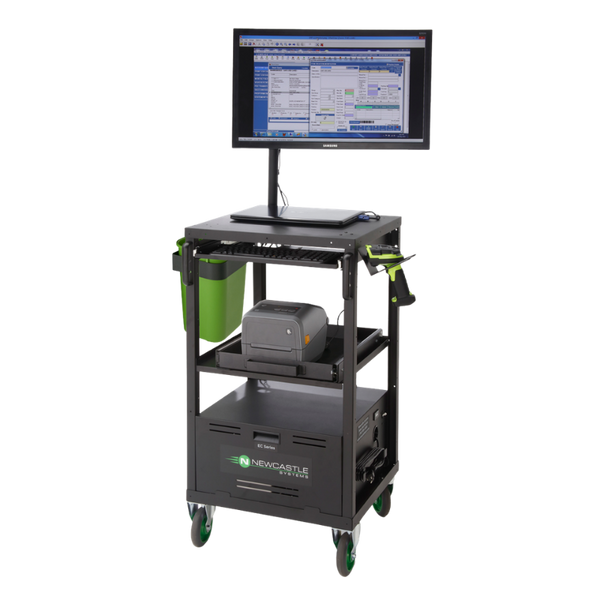
  • Optional powered mobile cart for labelling at the pallet
  • Location and carton label stock with matched ribbon
  • Multi-bay charging and spare batteries
Rugged2D ImagerIndustrial PrinterCart OptionDock to Location
Request Receiving System Quote
Forklift and Vehicle System
Warehouse SystemVehicle Mounted

Forklift and Vehicle System

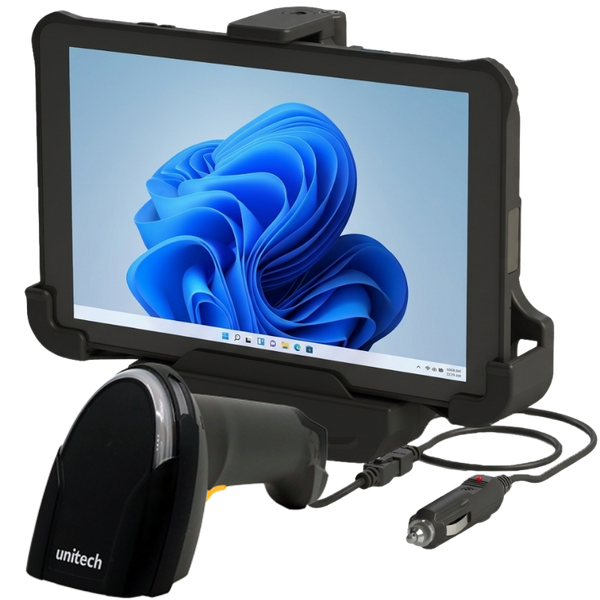
For operators who work from the truck. A vehicle-mounted terminal with a long-range scan engine so rack labels are read from the floor rather than the operator climbing down to confirm a location.

  • Vehicle-mounted computer with heated display option
  • Long-range corded or cordless scanner
  • Vehicle mount, power and cable management
  • Rugged keyboard or glove-capable touch
Vehicle MountedLong RangeGlove CapableCold Storage OptionForklift
Request Forklift System Quote
Warehouse Labelling System
Warehouse SystemLabelling

Warehouse Labelling System

Print and verify in one place. An industrial printer with matched media and a scanner to check what came out, which is how you catch a failing printhead before the carrier does.

  • Industrial 4 inch label printer, 203 or 300 dpi
  • Matched labels and thermal transfer ribbon
  • Handheld verification scanner
  • Spare printhead and cleaning supplies
Industrial PrinterMatched MediaPrint VerificationCarrier CompliantShipping
Request Labelling System Quote

Equipping a whole building?

Tell us your WMS or inventory software, how many operators need equipping, your rack heights and whether any of the work happens below freezing. We can standardise the hardware across the site so spares, batteries and chargers interchange, and stage delivery to your go-live.

Request a Site Recommendation

Questions We Get About Warehouse Hardware

The specification questions that come up most often, and the answers that stop a wrong order.

Which manufacturers do you carry for warehouse hardware?

We supply the manufacturers whose hardware holds up in a distribution centre and who still support it years after purchase. For mobile computing and scanning that is Zebra, Honeywell, Datalogic and Unitech, with Wasp where hardware and inventory software are bought together.

For labelling and printing we carry Zebra, SATO, Citizen, Brother, TSC and Honeywell. For point of sale and counter hardware, Star Micronics, Epson, Custom America and APG.

We are deliberately not tied to one manufacturer. The right choice depends on your software, your building and your budget, and we would rather specify against those than push a single brand.

What warehousing solutions do you offer?

We cover the hardware side of most warehouse and distribution workflows:

Inventory control for cycle counting and stock accuracy. Barcode labelling for location, carton and compliance labels. Asset tracking for tools, equipment and returnable containers.

Vehicle-mounted computing for forklift and yard operations. RFID where counting item by item has stopped being practical. Mobile powered workstations where printing and scanning need to travel with the operator rather than the operator walking back to a bench.

We also handle shipping and fulfilment printing, and can pre-configure and stage hardware across multiple sites.

Can we just use consumer tablets or phones in the warehouse?
You can, and plenty of sites try. The problem is repeat failure rather than a single breakage: a consumer device dropped onto concrete from a forklift cracks, and it happens again the following week. Rugged units publish a drop rating in feet and a tumble rating, meaning they are tested to survive repeated falls, not one. They also add glove-capable touch, hot-swappable batteries and scan engines that read damaged labels, none of which a phone offers.
How do I know if I need a long-range scanner?
Measure the distance from where the operator stands to your highest rack label. A standard-range engine reads at roughly arm's length. If your operators are confirming locations from a forklift or reading labels several levels up, you need an extended or long-range engine, and that is a different part number rather than a configuration setting. Getting it wrong shows up as staff climbing down or keying location numbers by hand.
What changes if part of the warehouse is a freezer?
Quite a lot. Standard hardware does not fail dramatically below freezing, it behaves unreliably: batteries lose capacity fast, screens respond slowly, and scan windows fog when a device moves between the freezer and ambient air. Freezer configurations add heated windows and displays, sealed housings and low-temperature batteries. Label adhesive matters too, because standard adhesive releases on chilled and frozen goods and the labels drop off.
Are wearable scanners worth it for picking?
In high-volume picking, usually yes. A ring scanner paired with a wrist-worn computer removes the pick-up and put-down motion from every scan, and an operator repeats that several hundred times a shift. The saving is small per scan and significant per day. Confirm your WMS supports a wearable screen layout first, since the display is much smaller than a handheld and some software assumes a full-size screen.
Should we move from barcode to RFID for cycle counting?
RFID changes the economics of counting because it reads hundreds of tags per second without line of sight, turning a weekend inventory into an hour. The caveat is that performance depends heavily on what the tag is attached to. A tag that reads perfectly on cardboard can go silent on metal or liquid, so pilot with your own products before committing to volume. You also need a printer that encodes RFID, since an ordinary label printer cannot.
Why are our shipping labels being rejected by the carrier?
Most often it is print quality rather than content. A worn printhead produces small voids in the barcode that scan fine on your own equipment at close range and fail at a carrier hub reading at speed. Printheads are consumable and rated in kilometres of media, so replacement is routine maintenance. Check the printhead first, then the media, before assuming the label format is wrong.
Hardware Selection Support

Not sure which model is right?

Send us what you are trying to do and we will come back with a specific recommendation rather than a catalogue. If you are replacing equipment, a model number or a photo of the existing setup is usually enough to work from.

  • Solutions experts on staff to answer your hardware questions
  • 30 day return policy, excluding consumables
  • In-stock items ship same day when ordered by 4:00pm Eastern
  • Volume and multi-location pricing reviewed on request

Ask a Question

We usually respond within 10 minutes on weekdays.

We use your details to answer your enquiry and nothing else.