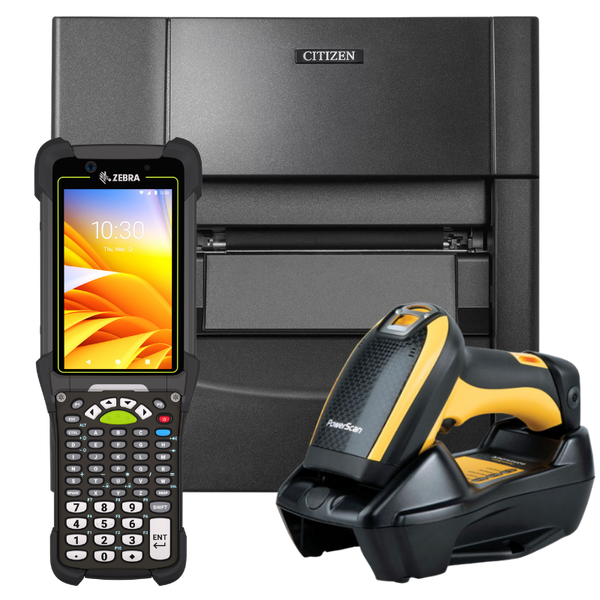
Healthcare Hardware

Patient Identification, Scanning and Labelling

Wristband printers, healthcare mobile computers, disinfectant-ready scanners and specimen labelling for hospitals, clinics, laboratories and pharmacy. Specified for the cleaning regime, the ward at night and media that has to last an admission.

Disinfectant-Ready HousingsSilent and Vibration Scan FeedbackWristband and Cryogenic MediaGlove-Capable Operation
Patient Identification, Scanning and Labelling

The Barcode Is the Patient

In most industries a failed scan is an inconvenience. In healthcare it is the link between a patient and their medication, or between a sample and the person it came from, and the consequences of getting it wrong are not commercial.

That changes the specification in ways that are easy to miss. A device that reads a damaged barcode incorrectly is worse than one that rejects it, so imaging technology matters more than scan speed. A wristband that smudges after a shower breaks the chain of identity halfway through an admission. A scanner that beeps at the bedside is a clinical problem at two in the morning.

Healthcare hardware is also cleaned constantly with disinfectants that destroy ordinary plastics, and shared across shifts rather than assigned to one person. Both are specification decisions made at purchase, and neither can be retrofitted.

Specify the media as carefully as the device. Most healthcare identification failures are label failures, not hardware failures.

The Barcode Is the Patient
Wipe-down Disinfectant-ready housings

Healthcare devices are cleaned between patients with harsh disinfectants. Standard plastics craze and yellow; healthcare housings are formulated to survive it.

7 days Wristband legibility

A patient wristband must stay scannable through showers, gels and a full admission. Standard label stock does not.

Silent Ward-appropriate operation

Scanner beeps and printer cutters carry at night. Vibration feedback and quiet cutting matter on a ward in a way they never do in a warehouse.

Cryo Specimen label survival

Labels going into freezers or through centrifuge need adhesive and facestock rated for it, or the sample loses its identity.

Questions Before You Order

Healthcare hardware decisions are difficult to reverse once devices are in clinical use. These are worth settling first.

01

What POS Software Will It Run?

Start here, because the software decides nearly everything else. Cloud and tablet platforms usually expect Android or iPadOS and publish a short list of approved printers. Established retail and restaurant packages tend to expect Windows and a wider set of ports. Get the vendor's supported hardware list before pricing anything.

03

What Are the Worst Conditions in the Building?

Specify against the freezer aisle and the loading dock, not the office. Cold storage needs heated windows and low-temperature batteries. Dusty or wet areas need a sealed IP rating. If any of the work happens below freezing, the label adhesive has to change too, because standard adhesive releases on chilled goods.

05

How Long Do the Labels Need to Last?

Direct thermal is cheaper to run because there is no ribbon, but it fades with heat, light and abrasion. Anything that must stay readable for months, or that will sit in a freezer or outdoors, needs thermal transfer with a matched ribbon. Print method is fixed at manufacture, so it is a purchase decision rather than a setting.

06

How Many Operators, and How Many Sites?

Equipping one workflow is a purchase; equipping a building is a standard. Once several operators carry the same device, spares, batteries and chargers should interchange, which argues for one model rather than the cheapest option each time. Across multiple sites, staged delivery and pre-configuration matter as much as the hardware itself.

Specify the Media as Carefully as the Device

Send us your clinical software, the workflows in scope and your cleaning protocol. We will confirm healthcare variants, wristband and specimen media, and scan feedback options before anything ships.

Talk to a Specialist

Hardware by Clinical Workflow

Admission, the bedside, the lab and the store room each impose different requirements. What links them is that identity has to survive the whole journey.

Workflow What It Involves Hardware Needed Key Consideration Shop
01Patient Admission

Registering the patient and producing the wristband that links them to their record for the whole admission.

  • Wristband printer
  • Antimicrobial wristband stock
  • Desktop scanner

The wristband has to stay scannable through showers, gels and days of wear. Standard label stock smudges within hours, so wristband media is a separate specification from ordinary labels.

02Medication Administration

Scanning the patient wristband and the medication at the bedside to confirm the right drug reaches the right patient.

  • Healthcare mobile computer
  • 2D imager
  • Shared charging cradle

Silent scan feedback matters here more than anywhere. A beep at the bedside at night wakes the ward, so vibration or adjustable volume should be confirmed before rollout.

03Specimen Collection and Labelling

Labelling samples at the point of collection so identity travels with the specimen into the lab.

  • Mobile or desktop label printer
  • Cryogenic label stock
  • Handheld scanner

Labels applied at the bedside may end up in a freezer or a centrifuge. Cryogenic adhesive and polyester facestock are what keep the label attached and readable through that.

04Equipment and Asset Tracking

Locating pumps, beds, wheelchairs and mobile equipment across a building, and confirming service intervals.

  • RFID reader or handheld
  • Durable asset labels
  • Fixed readers at doorways

Asset labels on clinical equipment go through the same disinfectant regime as the equipment. Polyester with a suitable adhesive survives it; paper labels do not last a month.

05Pharmacy and Supply

Receiving, storing and dispensing stock, including controlled items and refrigerated supply.

  • Desktop label printer
  • Barcode scanner
  • Cold storage labels

Refrigerated and frozen stock needs freezer-grade adhesive. A label that releases in a fridge leaves an unidentified item in a controlled supply chain.

Start with whichever workflow currently relies on handwriting or transcription. That is where identification errors originate, and where scanning pays back fastest.

Discuss Your Workflows

What Makes Healthcare Hardware Different

Clinical environments impose requirements that do not exist anywhere else, and most of them are decided at purchase rather than in configuration.

Disinfectant Wipe-Down

What happens

Devices are cleaned between patients with alcohol, bleach and quaternary compounds. Standard consumer plastics craze, yellow and eventually crack under that regime.

What to specify Specify healthcare variants explicitly. They use disinfectant-ready housings and sealed seams, and are usually a separate part number from the standard model.
  • healthcare

No Tolerance for a Misread

What happens

In retail a failed scan is an inconvenience. In medication administration or specimen collection it is a patient safety event, and a partially damaged barcode read incorrectly is worse than one not read at all.

What to specify Use 2D imagers that decode or reject cleanly rather than laser scanners that can misread a damaged code, and verify print quality on the labels themselves.
  • 2d
  • healthcare

Specimen and Wristband Media

What happens

A specimen label that peels in a freezer or a wristband that smudges after a shower destroys the link between the sample or patient and their record.

What to specify Match media to the journey. Cryogenic adhesive for frozen samples, and antimicrobial wristband stock rated for the length of an admission, not a shift.
  • polyester
  • wristband
  • cold storage

Noise on the Ward

What happens

A scanner beep or a printer cutter at three in the morning wakes patients. Hardware chosen for a retail counter is far too loud for a ward at night.

What to specify Look for adjustable or silent scan feedback with vibration, and printers with quiet cutting. This is a genuine clinical requirement, not a preference.
  • healthcare
  • quiet

Gloved Hands

What happens

Clinical staff wear gloves. A standard capacitive touchscreen ignores them, so the device is either operated badly or the gloves come off, which defeats the point of wearing them.

What to specify Glove-capable touch or a physical keypad. Confirm it works with the glove type actually used, since nitrile and latex behave differently.
  • resistive
  • keypad

Carried From Bed to Bed

What happens

Devices move constantly between rooms and get put down on beds, trolleys and floors. They are dropped often, and they are shared across shifts rather than assigned to one person.

What to specify Choose a device rated for repeated drops, and plan shared charging that any staff member can use without a personal setup step.
  • rugged
  • healthcare

Healthcare variants are separate part numbers, not options. Ordering the standard model and hoping it survives the cleaning regime is the most common and most expensive mistake in this category.

Check Your Requirements

Complete Healthcare Systems

Clinical identification depends on the device and the media agreeing with each other. These configurations pair them so identity survives the whole patient journey.

Zebra Mobile Computers
Mobile ComputingHandheld

Zebra Mobile Computers

The device the driver carries all day. Zebra's TC2X and EC series pair a proper 2D scan engine with Android and a supported upgrade path, which matters when the fleet has to stay on a certified OS version for the software running on it.

  • TC22 and TC2X series for general delivery and route work
  • EC50 and EC55 where a smaller pocketable device suits
  • 2D imager reads damaged and dirty parcel labels
  • Vehicle cradles, chargers and holsters available
Android2D ImagerWWAN OptionVehicle CradleRugged
View Zebra Mobile Computers
Warehouse Labelling System
Warehouse SystemLabelling

Warehouse Labelling System

Print and verify in one place. An industrial printer with matched media and a scanner to check what came out, which is how you catch a failing printhead before the carrier does.

  • Industrial 4 inch label printer, 203 or 300 dpi
  • Matched labels and thermal transfer ribbon
  • Handheld verification scanner
  • Spare printhead and cleaning supplies
Industrial PrinterMatched MediaPrint VerificationCarrier CompliantShipping
Request Labelling System Quote

Rolling out across a trust or hospital group?

Tell us your clinical software, the workflows in scope and your infection control requirements. We will specify the healthcare variants explicitly, match media to each workflow, and stage delivery ward by ward rather than all at once.

Request a Recommendation

Questions We Get About Healthcare Hardware

The specification questions that matter most in a clinical setting.

Which manufacturers do you carry for healthcare?

For mobile computing and scanning, Zebra and Honeywell both produce dedicated healthcare variants with disinfectant-ready housings. Datalogic also offer healthcare scanners.

For wristband and label printing, Zebra is the strongest line, with Brother and Citizen for desktop labelling. For patient and staff ID cards, card printers from Zebra and Entrust.

Healthcare models are separate part numbers rather than options, so confirm the healthcare variant explicitly when ordering.

What healthcare solutions do you offer?

Patient identification and wristband printing, medication administration scanning, specimen collection and lab labelling, and staff badging with card printers.

Asset tracking for pumps, beds and mobile equipment. Inventory control for pharmacy and supply. RFID where equipment location across a building matters more than periodic counting.

We supply the hardware behind clinical software rather than the software itself, so we work with whatever system your organisation has selected.

Can we use standard scanners if we wipe them down?

Not reliably. Clinical disinfectants including alcohol, bleach and quaternary compounds attack the plastics used in standard enterprise hardware. The failure is gradual rather than immediate: housings craze, yellow and eventually crack, and warranty claims are often refused because the cleaning regime is outside the specification.

Healthcare variants use disinfectant-ready housings and sealed seams. They cost more, but the alternative is replacing devices on a cycle that nobody budgeted for.

What wristband material should we use?

Match the material to the length of stay and the setting. Standard direct thermal wristbands are fine for outpatient and day cases. For inpatient admissions of several days, choose stock rated to stay legible through showers, alcohol gels and continuous wear, and consider antimicrobial coating.

Neonatal and paediatric need softer, smaller formats. Whichever you choose, print a test band and put it through a realistic wash and wear cycle before committing to volume, because the failure only shows up on day three.

Which labels survive a freezer or a centrifuge?

Polyester facestock with a cryogenic adhesive. Paper labels applied at room temperature and then frozen will release at the corners, and a label that detaches in a rack of samples is an identification failure that cannot be recovered.

The adhesive matters more than the facestock. Standard permanent adhesive is rated for room temperature application and use; cryogenic adhesive is formulated to bond and stay bonded through freeze-thaw cycles. Specify both when ordering polyester label stock.

Can scanners be silenced for night shifts?

Most enterprise scanners allow beep volume to be adjusted or disabled, and healthcare models generally offer vibration feedback as an alternative so staff still get confirmation of a successful read.

Check this at evaluation rather than assuming. Some consumer-grade scanners have a fixed beep, and printers vary considerably in cutter noise. On a ward at night both are noticed immediately.

Hardware Selection Support

Not sure which model is right?

Send us what you are trying to do and we will come back with a specific recommendation rather than a catalogue. If you are replacing equipment, a model number or a photo of the existing setup is usually enough to work from.

  • Solutions experts on staff to answer your hardware questions
  • 30 day return policy, excluding consumables
  • In-stock items ship same day when ordered by 4:00pm Eastern
  • Volume and multi-location pricing reviewed on request

Ask a Question

We usually respond within 10 minutes on weekdays.

We use your details to answer your enquiry and nothing else.