
What Are You Tagging?
Apparel, cartons, pallets, tools, medical equipment, machinery and reusable containers may each require a different RFID label or durable tag.
Support RFID software with compatible printers, encoders, handheld readers, fixed readers, mobile computers, antennas, tags, labels and project deployment services.
Select the hardware category that best supports the application, environment and deployment workflow.
RFID uses radio frequency technology to identify, count and track tagged products or assets without requiring a direct line of sight. Multiple RFID tags can be captured during a single read event, helping businesses complete inventory counts, locate equipment and automate operational checkpoints more efficiently.
RFID solutions are used throughout warehouses, manufacturing facilities, retail stores, healthcare organizations, distribution centers and asset-management programs. Depending on the workflow, RFID can support mobile inventory counts, fixed portal reading, shipping verification, work-in-process tracking and equipment visibility.
A successful deployment requires more than selecting one reader. The reader, printer or encoder, RFID label or durable tag, antennas and software must all be matched to the item, environment and desired read event.
RFID Planning Guide
RFID performance depends on the tagged item, the surrounding environment and the way information must be captured. Confirm these six factors before selecting readers, printers, labels or tags.
Apparel, cartons, pallets, tools, medical equipment, machinery and reusable containers may each require a different RFID label or durable tag.
Determine whether users will perform mobile inventory counts or whether items will pass through fixed portals, dock doors, production stations or other controlled read zones.
Metal, liquid, chemicals, moisture, temperature extremes and outdoor exposure can affect RFID performance and tag durability.
Short-range identification, handheld inventory counting and long-range portal reading require different reader power levels, antennas and RFID tag designs.
Select printable labels for products and cartons or reusable hard tags for tools, equipment, returnable assets and demanding environments.
Confirm that the selected readers and printers can exchange data with the inventory, WMS, ERP, asset-tracking or middleware platform used by the organization.
Why Businesses Use RFID
RFID can complement or replace manual barcode scans in workflows where faster identification, automated reads or item-level visibility provide a measurable operational advantage.
Capture multiple tagged items during one read event instead of positioning and scanning every barcode individually.
Reduce missed manual scans and provide more frequent inventory updates throughout the operation.
Locate and audit equipment, tools, containers and other tagged assets throughout a facility.
Use fixed readers and antennas to capture tagged items at doors, portals, workstations or production checkpoints.
Compare tagged products, cartons, pallets or reusable containers against the expected outbound shipment.
Begin with handheld RFID counting and expand into fixed readers, portals, printer encoding and additional locations.
Build the RFID solution around the way tagged items will be read, printed and managed. Explore live products from the ShopPOSPortal catalog, including mobile RFID readers, RFID printer-encoders and RFID labels designed for inventory, asset tracking, warehousing, manufacturing and automated identification.
Capture RFID Data
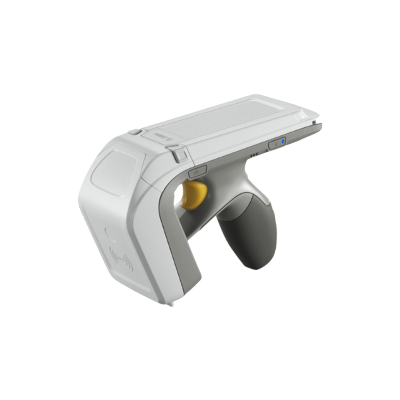
Use handheld RFID readers and integrated RFID mobile computers for inventory counts, asset searches and mobile workflows. Fixed RFID readers can be added when tagged products need to be captured automatically at portals, dock doors, workstations or production checkpoints.
Zebra
 MC3300ax FUTURE PROOF WITH WI-FI 6 AND THE NEXT GENERATION IN DEVICE TRACKING TECHNOLOGY The MC3300ax builds on its previous model MC3300x to create...
Zebra
The MC3330xR delivers the same proven lightweight, ergonomic design and superior RFID read performance and barcode scanning found on the MC3330R, and ad...
Zebra
The MC3390xR delivers the same proven lightweight ergonomic design and superior long-range RFID read performance and barcode scanning found on the MC339...
Print and Encode
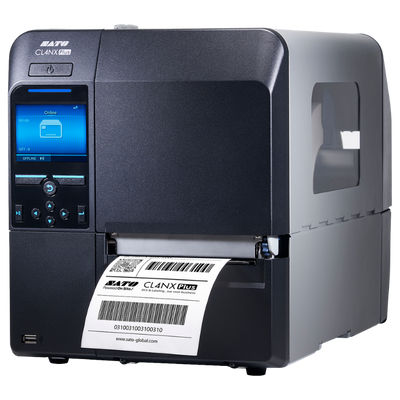
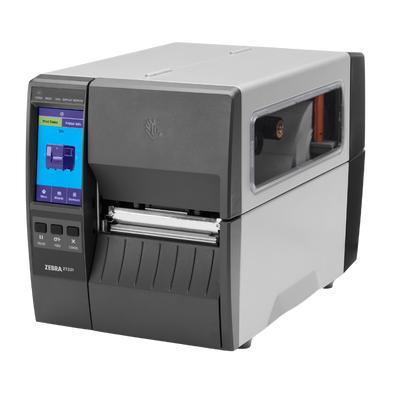
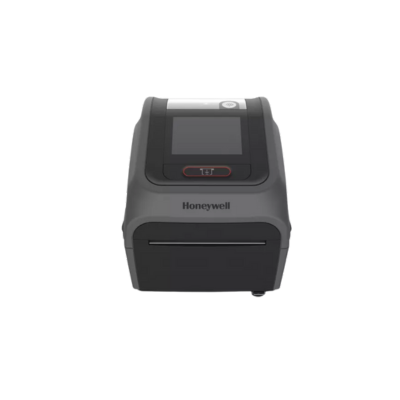
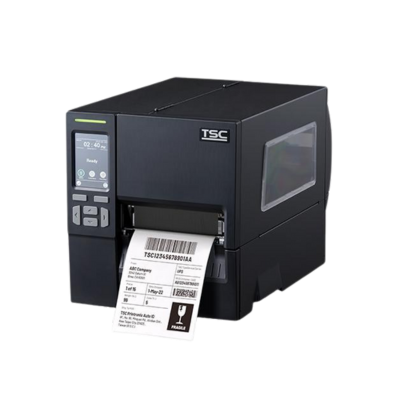
RFID printer-encoders print barcodes, text and graphics while encoding data into the RFID inlay contained inside each label. Choose a compact desktop model for distributed printing or a larger platform for higher-volume warehouse and manufacturing applications.
Zebra
Zebra ZD621R RFID Thermal Transfer Desktop Printer A premium 4-inch RFID printer and encoder for item-level tracking, smart labels and con...
Zebra
Print and encode RFID labels and tags up to 6.6 inches (168 mm) wide with the ZT620 RFID industrial printer. Available in 203 dpi and 300 dpi. Key Featu...
Zebra
Zebra ZT231 Industrial Label Printer A compact, value-focused industrial printer built for dependable daily barcode and shipping label prod...
Identify the Item
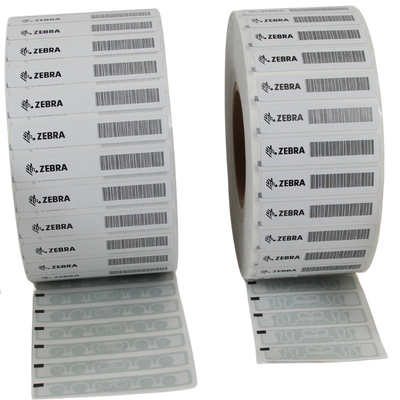
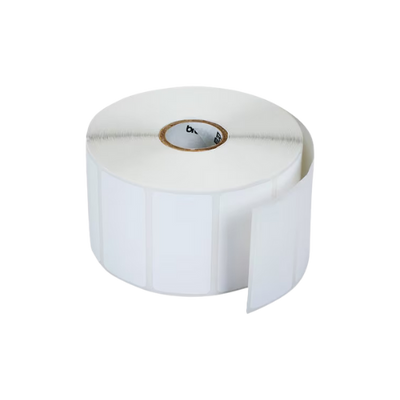
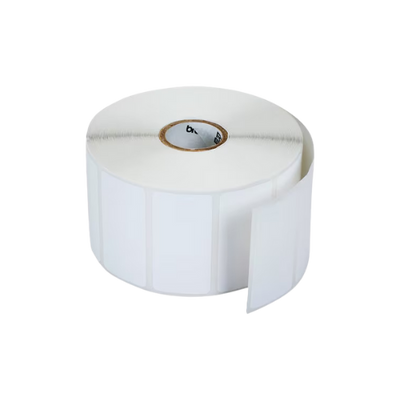
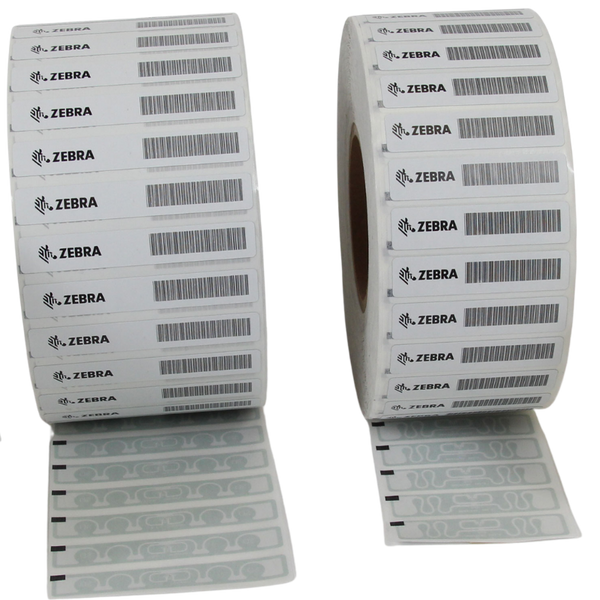
Match the RFID label or tag to the tagged surface, operating environment, required read range and expected service life. Standard paper RFID labels work for many products and cartons, while synthetic, on-metal and durable constructions support more demanding applications.
Zebra
Zebra RFID Thermal Transfer Labels – 1.84" x 1.25" Zebra 1.84" x 1.25" RFID thermal transfer labels are designed for businesses that need reliable, high...
Zebra
Label, Paper, 3x1in (76.2x25.4mm); TT, Z-Perform 1500T, Coated, Permanent Adhesive, 3in (76.2mm) core, RFID, Plain, 1000/ROLL, 2/BOX Thermal transf...
Zebra
Label, Paper, 3x1in (76.2x25.4mm); TT, Z-Perform 1500T, Coated, Permanent Adhesive, 3in (76.2mm) core, RFID, Plain, 4000/ROLL, 1/BOX Thermal transf...
Verify the printer model, label dimensions, inlay position, chip type, tagged surface, adhesive, read distance, frequency, winding direction, roll core and operating environment. RFID media should be tested on the actual item before a full-scale deployment.
The RFID face material affects print quality, durability, moisture resistance, chemical resistance and expected service life. Match the material to the tagged surface and operating environment.
| RFID Material | Best Surfaces | Environment | Durability | Best Applications | Selection Notes |
|---|---|---|---|---|---|
| Paper RFID Labels | Cardboard, corrugate, paper packaging and clean product surfaces | Indoor and dry | Shipping cartons, retail inventory and disposable tracking | Economical choice for short-term applications with limited moisture or abrasion. | |
| Polypropylene RFID Labels | Plastic containers, smooth packaging, totes and bins | Indoor and light outdoor | Warehouse totes, reusable containers and inventory bins | More resistant to moisture and tearing than standard paper labels. | |
| Polyester RFID Labels | Equipment, machinery, electronics, tools and fixed assets | Indoor or outdoor | Asset identification, manufacturing and industrial tracking | Strong option for long service life, abrasion resistance and chemical exposure. | |
| Synthetic Film RFID Labels | Plastic, glass, sealed packaging and moisture-exposed items | Indoor, refrigerated or outdoor | Healthcare, laboratories, food production and manufacturing | Available in specialized constructions for moisture, chemicals and abrasion. | |
| Flexible Vinyl RFID Labels | Drums, cylinders, pipes and curved containers | Indoor or outdoor | Drum tracking, pipe identification and irregular assets | Flexible construction conforms better to curved or uneven surfaces. | |
| Tamper-Evident RFID Labels | Devices, sealed containers and high-value assets | Primarily indoor | Warranty control, chain of custody and security applications | Provides visible evidence when the label is removed or transferred. | |
| Cryogenic RFID Labels | Vials, tubes and laboratory containers | Freezer and ultra-low temperature | Biotechnology, specimens and pharmaceutical research | Must be matched to the target temperature and container material. | |
| High-Temperature Polyimide | Electronics, circuit boards and heat-exposed components | High-temperature production | Electronics manufacturing and work-in-process tracking | Temperature limits depend on the adhesive, chip and total construction. | |
| Rigid RFID Hard Tags | Machinery, vehicles, pallets and reusable equipment | Indoor, outdoor and industrial | Tools, fleet assets, returnable containers and industrial equipment | Can attach with screws, rivets, cable ties, epoxy or industrial adhesive. |
Adhesive performance depends on the tagged surface, application temperature, operating temperature, exposure conditions and whether the RFID label must remain permanent or remove cleanly.
| Adhesive Type | Best For | Surface Compatibility | Removability | Typical Uses | Selection Notes |
|---|---|---|---|---|---|
| Permanent Acrylic | General-purpose RFID labeling | Cardboard, paper, glass, metal and many smooth plastics | Permanent | Inventory, shipping, retail products and asset tracking | A common starting point for clean surfaces and standard indoor conditions. |
| High-Tack Acrylic | Rough or textured surfaces | Corrugate, painted metal, wood and textured plastic | Permanent | Warehouse assets, reusable containers and equipment | Provides stronger initial tack and holding power than standard adhesives. |
| Low-Surface-Energy Adhesive | Hard-to-bond plastics | Polypropylene, polyethylene and molded plastic | Permanent | Plastic totes, bins, containers and manufactured parts | Testing is important because plastic formulations affect adhesion. |
| Freezer-Grade Adhesive | Cold storage and refrigerated environments | Cartons, packaging and selected plastic containers | Permanent | Food distribution, cold-chain logistics and laboratories | Confirm both application temperature and service-temperature ratings. |
| Removable Adhesive | Temporary RFID identification | Glass, smooth plastic and finished surfaces | Removable | Rental assets, temporary inventory and work-in-process | Removal performance changes with dwell time, temperature and surface finish. |
| Repositionable Adhesive | Labels requiring initial placement adjustment | Smooth and clean surfaces | Initially repositionable | Manual application, staging and configurable kits | Repositionability usually decreases after the adhesive fully bonds. |
| Ultra-Aggressive Adhesive | Long-term industrial attachment | Rough metal, wood and textured equipment | Permanent | Machinery, tools and industrial assets | Surface cleaning may still be required for grease, rust, dirt or dust. |
| Outdoor UV-Resistant Adhesive | Exterior applications | Metal, painted equipment and outdoor enclosures | Permanent | Yard assets, construction equipment and fleet assets | The label face material and printing must also be outdoor rated. |
| Healthcare Specialty Adhesive | Healthcare containers and approved patient-identification products | Application dependent | Application dependent | Specimen containers, medications, wristbands and medical assets | Direct-skin applications require a complete approved construction. |
The RFID inlay contains the chip and antenna. Antenna dimensions, chip capabilities, orientation, tagged material and reader placement all influence practical read performance.
| Inlay Type | Typical Read Profile | Best Applications | Primary Advantage | Important Considerations |
|---|---|---|---|---|
| Compact Inlay | Generally shorter range | Jewelry, cosmetics, small components and medication containers | Fits smaller label dimensions | Reduced antenna area can limit performance near metal or liquids. |
| General-Purpose UHF Inlay | Balanced short-to-medium range | Retail, cartons, warehouse labels and general assets | Versatile for common RFID deployments | Performance depends on orientation, tagged surface and reader configuration. |
| Long-Range UHF Inlay | Extended range under suitable conditions | Warehouse portals, pallets, logistics and bulk inventory | Larger antenna can improve read distance | Requires sufficient label space and testing on the actual product. |
| On-Metal Inlay | Optimized for direct placement on metal | Tools, machinery, IT equipment and vehicles | Reduces interference caused by metal | Standard RFID labels often perform poorly when placed directly on metal. |
| Near-Field UHF Inlay | Very short and controlled read zone | Pharmaceuticals, healthcare and dense item-level applications | Helps reduce unintended cross-reads | Requires compatible readers and antennas designed for near-field workflows. |
| Dual-Frequency Inlay | Depends on supported technologies | Applications requiring long-range and close-range interaction | Supports more than one RFID interaction method | Chip, software and reader compatibility must be confirmed. |
| High-Memory Inlay | Application dependent | Manufacturing, maintenance records and specialized assets | Provides additional user memory | Additional memory does not automatically increase read distance. |
| Conveyor-Optimized Inlay | Controlled moving read zone | Conveyors, production lines and automated shipping | Supports repeatable high-throughput reading | Reader power, antenna placement, speed and spacing must work together. |
These combinations provide a practical starting point. Final media selection should be validated using the actual item, reader, printer and operating environment.
| Application | Recommended Material | Recommended Adhesive | Recommended Inlay | Primary Considerations |
|---|---|---|---|---|
| Retail Inventory | Paper or thin synthetic film | Permanent acrylic | General-purpose or compact UHF | Product size, packaging material and label placement |
| Warehouse Cartons | Paper or polypropylene | Permanent or high-tack acrylic | General-purpose or long-range UHF | Portal orientation, carton contents and pallet density |
| Manufacturing Work-in-Process | Polyester or synthetic film | Industrial permanent acrylic | General-purpose or high-memory inlay | Heat, chemicals, abrasion and expected process duration |
| Metal Equipment | Polyester label or rigid tag | Industrial adhesive or mechanical attachment | On-metal RFID | Metal type, mounting position, orientation and read distance |
| Cold Storage | Polypropylene or synthetic film | Freezer-grade adhesive | Application-tested UHF | Application temperature, condensation, frost and moisture |
| Outdoor Assets | Outdoor polyester or encapsulated tag | Outdoor adhesive or mechanical attachment | On-metal or outdoor-rated UHF | UV exposure, water, impact and temperature cycling |
| Healthcare and Laboratory | Synthetic, cryogenic or specialty media | Application-specific adhesive | Compact or near-field UHF | Liquids, temperature, chemicals and container dimensions |
| Returnable Containers | Polypropylene, polyester or rigid tag | High-tack adhesive or mechanical attachment | General-purpose or long-range UHF | Wash cycles, impact, stacking and container material |