Resources
Shop by Hardware Type
The categories we sell most. Every collection covers the commercial models we hold, with the accessories, cables and supplies that go with them.

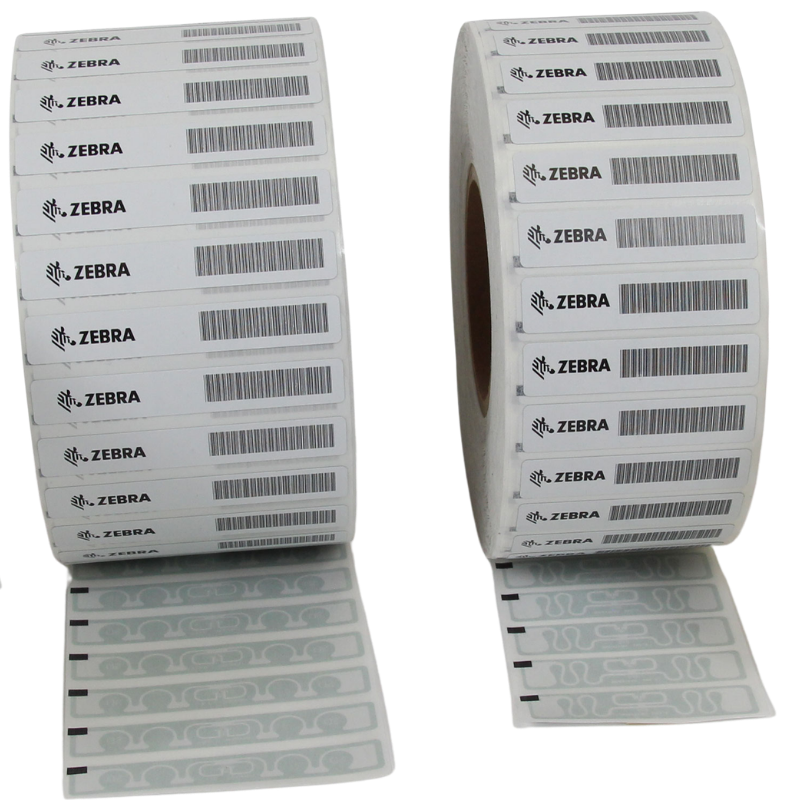
Printable RFID labels and inlays for retail, warehousing and asset tracking. Check inlay compatibility with your printer before ordering volume.
Choosing material, print method and adhesive, and matching the label to how long it has to survive.
Direct thermal labels print without a ribbon. The label stock itself is heat sensitive, and the printhead darkens it directly. Fewer consumables, lower cost per label, nothing to reload mid-shift.
Thermal transfer labels need a ribbon. The printhead melts pigment from the ribbon onto the label, which produces a mark that survives heat, sunlight, abrasion and most chemicals. Every durable label is thermal transfer, without exception.
The deciding question is not cost, it is lifespan. Direct thermal print fades within roughly six to twelve months, faster in a warm or sunlit space. If the label must still scan after that, it has to be thermal transfer.
Plan for six to twelve months indoors at room temperature. That covers the whole life of a shipping label, a picking label or a receipt-style application, which is why direct thermal dominates ecommerce fulfilment.
Heat, direct sunlight, friction and solvents all shorten it sharply. A direct thermal label on a windscreen or a warm machine can grey out within days. The stock is chemically primed to darken with heat, so anything warm is working against you.
If a label lives in a box, ships, and is thrown away, direct thermal is the right economics. If it stays on an asset, it is the wrong choice regardless of price.
Yes, and cold is one of the few environments that treats direct thermal well, because the print does not fade in a freezer the way it does in heat. The difficulty is the adhesive, not the print.
Standard adhesive fails when applied to a frozen or wet surface. You need either a freezer-grade adhesive rated for application at low temperature, or an all-temperature adhesive applied before the product is chilled. Getting this wrong shows up as labels on the floor a week later.
For long-term cold storage or anything moving between freezer and ambient repeatedly, a polypropylene or polyester label with a freezer adhesive is the more reliable build.
Work backwards from the environment. Paper is right for anything short-lived and indoors. Polypropylene handles moisture and light handling. Polyester handles chemicals, abrasion, temperature and sunlight, which is why it is the standard for asset tags and anything permanent.
Above polyester there are two specialist materials. Polyimide survives the extreme heat of electronics manufacture, including reflow ovens. Acrylic is built for sustained chemical exposure where even polyester would degrade.
A useful rule: if the label outlives the packaging it is stuck to, do not use paper.
Polyester is the workhorse durable label material, and the right answer whenever a barcode has to stay scannable for years rather than weeks. It resists abrasion, solvents, oils, moisture, UV and a wide temperature range, and it does not tear.
The common applications are asset tags and equipment labelling, warehouse rack and bin location labels, outdoor and yard signage, laboratory and chemical containers, compliance and rating plates, and any product label that has to survive a full service life. Zebra's polyester range is the Z-Ultimate family, with Z-Xtreme for the more aggressive builds.
Polyester costs more per label than paper, and that comparison misleads people. The relevant cost is relabelling: an unreadable asset tag means someone walks the warehouse re-identifying equipment by hand. One reprint cycle usually exceeds the material saving.
Browse Zebra polyester labels.
Polypropylene is the mid-tier synthetic. It shrugs off moisture, tearing and everyday handling, and costs less than polyester. It suits retail product labels, cold storage, and anything that needs to survive a wet environment for a season or two.
Polyester is the durable tier. It adds genuine chemical and solvent resistance, UV stability for outdoor use, abrasion resistance, and a much wider temperature range. It is the material that survives being scrubbed, degreased or left in sunlight for years.
If the label faces water, choose polypropylene. If it faces chemicals, sunlight, heat or a scouring pad, choose polyester.
The facestock is waterproof, and so is thermal transfer print made with a resin ribbon. A correctly built polyester label can be submerged, washed down or left outdoors without the barcode degrading.
The limit is usually the adhesive rather than the material. Standard permanent adhesive can creep on a wet or oily surface, so for washdown areas, outdoor assets or anything cleaned with pressure, specify an adhesive rated for it when ordering.
One caveat worth knowing: a polyester label printed with a wax ribbon is not waterproof, because the print smears even though the label does not. Material and ribbon have to match.
Polyimide is the high-temperature specialist, sold by Zebra as the Z-Supreme range. It survives the reflow and wave-solder ovens used in electronics manufacture, which destroy every other label material.
The typical applications are circuit board tracking through assembly, component and sub-assembly identification, and any part that gets baked, powder-coated or heat-treated after labelling.
It is considerably more expensive than polyester and unnecessary anywhere below those temperatures. If the label is not going into an oven, polyester is almost certainly the better spend.
Acrylic, Zebra's Z-Endure range, is built for sustained chemical contact rather than occasional splashes. Laboratory containers, drum and chemical vessel labelling, and industrial settings involving repeated solvent exposure are the usual cases.
Polyester already resists most common chemicals, so acrylic is a deliberate step up for a known problem. If you have had polyester labels lift, cloud or lose print in a specific process, that is the signal.
Tell us which chemicals and at what concentration and we will confirm whether polyester is sufficient or acrylic is genuinely required.
Polyolefin is the conformable synthetic. It flexes and stretches in a way polyester will not, so it stays adhered to curved, soft or squeezable surfaces such as bottles, tubes, cables and irregular containers.
The trade-off is durability: it does not match polyester for abrasion or chemical resistance. Choose it when the shape of the surface is the problem rather than the environment.
Ribbon must match the facestock, and this is the single most common ordering mistake. Wax ribbons pair with paper labels. Wax/resin pairs with coated paper and some synthetics. Resin pairs with polyester, polyimide and anything durable.
The pairing is not a preference, it is chemistry. Resin needs a synthetic surface to bond to, and wax will not adhere durably to polyester, so the print smudges off under a fingernail. A premium polyester label printed with a wax ribbon performs worse than a paper label.
If you are buying polyester, budget for resin ribbon at the same time. Shop thermal transfer ribbons.
Almost always a ribbon mismatch. Wax or wax/resin ribbon on a synthetic label produces print that looks perfect coming out of the printer and rubs away in handling, because the pigment sits on the surface instead of bonding into it.
Move to a resin ribbon for polyester, polyimide or acrylic labels. If the print is already correct in material terms, check darkness and printhead pressure next, since underburning produces a similar symptom.
Send us the label part number and the ribbon you are running and we will confirm whether they are compatible.
No. That is the defining feature. The image is created in the label coating by heat alone, so there is one consumable to stock and one thing to load.
Loading a ribbon into a direct thermal printer is not possible on most models, and running direct thermal stock through a thermal transfer printer without disabling the ribbon simply wastes ribbon. Set the printer mode to match the media.
Core is the cardboard tube in the centre of the roll; OD is the outside diameter of the full roll. Together they determine which printers the roll physically fits.
A 1-inch core with a 5-inch OD is the desktop standard, suiting units like the ZD421. A 3-inch core with an 8-inch OD is the industrial standard for the ZT series, holding far more labels per roll and therefore requiring fewer changes per shift.
An industrial roll will not fit a desktop printer, and a desktop roll on an industrial machine wastes most of the media capacity you paid for. Match the roll to the printer before matching anything else.
It depends on label size and roll diameter rather than any fixed number. A 4x6 shipping label on a desktop roll might give a few hundred; a small 2x1 label on an 8-inch industrial roll can run into the thousands.
The practical figure to plan against is labels per shift, not labels per roll. Once you know that, the roll size decision follows, because larger rolls mean fewer interruptions, which matters more on a picking line than the unit price does.
Perforation puts a tear line between labels, which helps when staff separate labels by hand or when the printer has no cutter.
For applicator use, high-speed printing or anything peeled directly from the liner, unperforated is usually better, because the perforation is a weak point that can cause the web to break under tension.
If in doubt, choose perforated for manual workflows and unperforated for automated ones.
Permanent adhesive is the default and suits most applications. Removable adhesive lifts cleanly and suits temporary marking, retail pricing and anything reused. Freezer adhesive is formulated to bond at low temperature, and high-tack adhesive grips rough, textured or low-energy surfaces like corrugated card and some plastics.
The surface matters as much as the environment. A permanent adhesive on unfinished cardboard or a powder-coated rack can still fail, because the surface energy is too low for a standard formulation. Tell us what you are sticking to and we will match it.
Direct thermal paper, 4x6 inches, is the industry standard and what every carrier expects. There is no ribbon to manage, the label only has to survive transit, and the cost per label is as low as it goes.
Choose a permanent adhesive rated for corrugated card, and unperforated rolls if you run any kind of applicator. Everything else is over-specifying for a label that is discarded on delivery.
Thermal transfer polyester with a resin ribbon. This is the standard build for asset tagging and there is no close second, because an asset label has to remain scannable for the entire service life of the equipment it identifies.
Polyester survives cleaning, handling, temperature swings and UV without the barcode degrading. Add a permanent or tamper-evident adhesive depending on whether you need the tag to resist removal, and consider a laminated or high-performance coated build for equipment that is handled daily.
The failure mode with cheaper materials is expensive rather than dramatic: a warehouse of unscannable asset tags means a manual audit. Browse durable polyester asset labels.
Polyester for anything permanent. Rack and bin location labels are scanned constantly, wiped, knocked by pallets and often sit in unheated space, and paper labels in that role become a recurring replacement job.
Use a high-tack or permanent adhesive, because racking is usually powder-coated steel and standard adhesive can lift at the edges over time. For cold storage racking, specify a freezer-grade adhesive as well.
Browse polyester warehouse labels.
Thermal transfer polyester with a resin ribbon. UV is the factor people underestimate: sunlight fades direct thermal within days and degrades wax print quickly, while polyester with resin holds up for years.
Specify an adhesive rated for outdoor temperature cycling, since repeated freeze and thaw is harder on adhesive than sustained cold. For yard signage, drum labelling or equipment left in the open, this is the only build worth ordering.
Browse outdoor polyester labels.
Start with thermal transfer polyester and a resin ribbon, which resists most common solvents, oils and cleaning agents while staying legible.
Step up to acrylic where exposure is sustained and direct rather than incidental, such as repeated solvent wipes, immersion, or aggressive concentrations. Polyimide is the choice only where high heat is also involved.
Chemical labelling often carries compliance requirements around durability and legibility, so tell us the standard you are working to and we will confirm the build meets it.
Send us what you are trying to do and we will come back with a specific recommendation rather than a catalogue. If you are replacing equipment, a model number or a photo of the existing setup is usually enough to work from.
We usually respond within 10 minutes on weekdays.
Compare hardware classes, connectivity, durability ratings, accessories and supplies before committing to equipment. If the specification is right the first time, the install is a day rather than a project.
The categories we sell most. Every collection covers the commercial models we hold, with the accessories, cables and supplies that go with them.
See how this hardware fits into a complete deployment, from a single counter through to multi-site inventory and asset tracking.
Tell us the software you run, the quantity you need and where the equipment will live. We will specify it and confirm compatibility before you order.
Our team can match hardware, accessories, cables, mounts and supplies to your workflow and operating environment. In-stock items ordered before 4:00pm ET ship the same day.