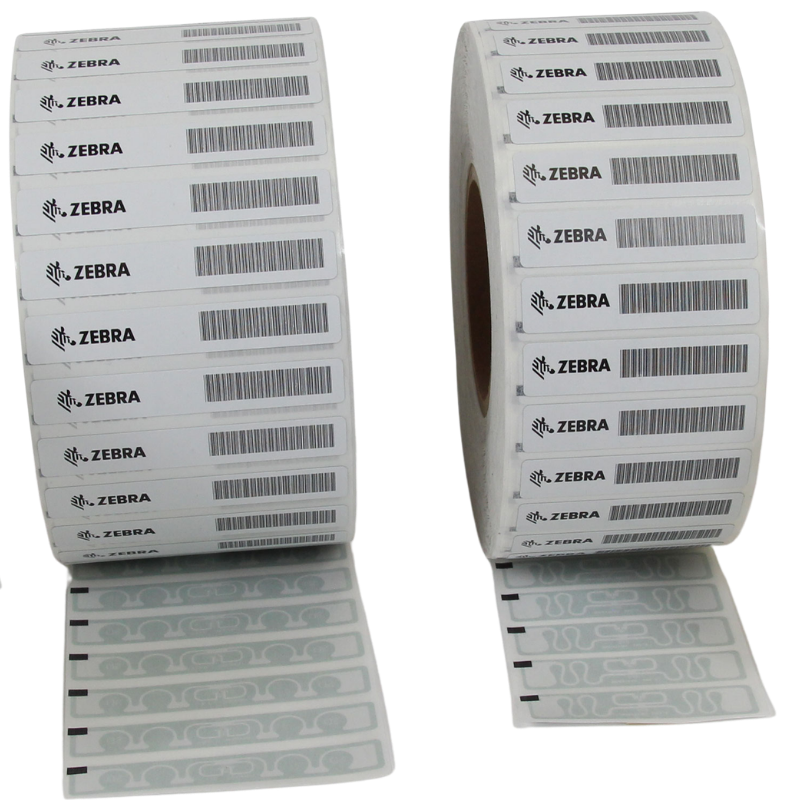
Tag selection is decided by what the tag is attached to, not by the reader. Metal and liquids both kill read range, so specify on-metal tags where needed and pilot with your actual products before ordering volume.
What is the difference between an RFID tag and an RFID label?
An RFID label is a printed paper or synthetic label with an inlay inside, applied once and usually disposable. A hard tag is a moulded plastic or metal-mount device built to survive years of handling, washing, heat or outdoor exposure, and is generally reusable. Labels suit retail merchandise and cartons; hard tags suit tools, IT equipment, returnable containers and anything tracked over a long service life.
Do RFID tags work on metal?
Not standard ones. Metal detunes a normal RFID antenna and the tag effectively goes silent, which is the most common surprise in a first deployment. On-metal tags use a spacer or ground plane between the antenna and the surface so they read reliably when mounted directly to equipment, racking or containers. They cost more and are physically thicker. If anything you are tagging is metal, specify on-metal tags rather than discovering the problem at the reader.
How are RFID hard tags attached?
Common methods are adhesive, screws or rivets, cable ties, and embedding into the asset. Choice depends on the surface, whether the tag must be removable, and how much abuse it will take. Adhesive is quickest but fails on textured, oily or very cold surfaces. Mechanical fixing survives washdown and outdoor use. Consider tamper resistance too if the tag is part of an audit trail, since a tag that can be swapped undermines the whole record.
Do RFID tags come pre-encoded?
They can be supplied blank for you to encode, or pre-encoded to a numbering scheme you specify. Encoding on site needs an RFID printer or a reader capable of writing, plus software that can send the encode command. Pre-encoded tags remove that step but mean the numbering must be agreed up front and matched into your system. Confirm your asset or inventory software can accept the tag data format before ordering either way.
How far can an RFID tag be read?
Read range depends on the tag, the reader, the antenna and what the tag is attached to, so published figures are best-case. Liquids absorb and metals reflect, both of which cut range dramatically. A tag reading several metres on cardboard may read centimetres on a bottle. This is why a pilot with your actual products in your actual environment is worth more than any specification sheet.
What is the difference between UHF and HF RFID tags?
UHF offers longer read range and bulk reading of many tags at once, which is why it dominates inventory, warehousing and asset tracking. HF and NFC work at very short range, typically a tap, and suit access control, payment and single-item identification. They are not interchangeable, and readers only work with the frequency they are built for. Confirm which your system uses before ordering tags.
Hardware Selection Support
Not sure which model is right?
Send us what you are trying to do and we will come back with a specific recommendation rather than a catalogue. If you are replacing equipment, a model number or a photo of the existing setup is usually enough to work from.
Solutions experts on staff to answer your hardware questions
30 day return policy, excluding consumables
In-stock items ship same day when ordered by 4:00pm Eastern
Volume and multi-location pricing reviewed on request
Ask a Question
We usually respond within 10 minutes on weekdays.
Choosing a selection results in a full page refresh.