Zebra RFID Label Printers

Printers that encode the RFID chip inside a smart label while printing the barcode on its face. For stock counting, receiving and asset tracking without line of sight.

Buying Guide

Zebra RFID Label Printer Questions

What encoding adds, whether you need it, and which smart labels to run.

What does an RFID printer do that a normal label printer does not?

An RFID printer encodes the chip embedded in a smart label at the same time as it prints the barcode and text on the face. You get a label that can be read visually, scanned as a barcode, or read by radio without line of sight.

A standard printer cannot encode a chip, and running RFID media through one wastes expensive labels.

If you do not need radio reading, a standard label printer is the cheaper choice.

Do I need RFID or is barcode enough?

Barcode needs line of sight and one scan per item. RFID reads many tags at once through boxes and packaging, so a full carton or pallet can be counted in seconds.

That advantage shows up in stock counting, high-volume receiving and asset tracking across a large area. Retailers running frequent full-store counts see the clearest return.

RFID labels cost more per unit than printed barcodes, and you need readers as well as an encoding printer. For most workflows barcode remains the right economics.

What labels do RFID printers use?

RFID smart labels contain an inlay, which is the chip and antenna sandwiched inside the label stock. They are not interchangeable with standard labels and cost considerably more.

Inlay position and type matter. The printer has to be calibrated to encode in the right place, and different inlays suit different materials and read ranges. Tagging metal or liquid containers needs specific inlays designed for it.

Browse Zebra labels.

Which RFID printer should I choose?

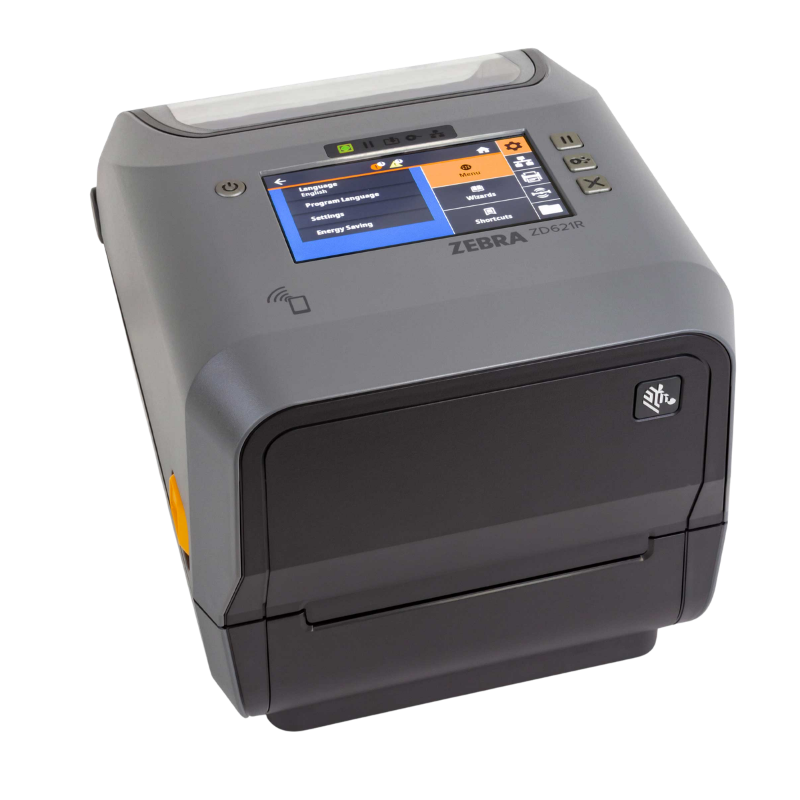
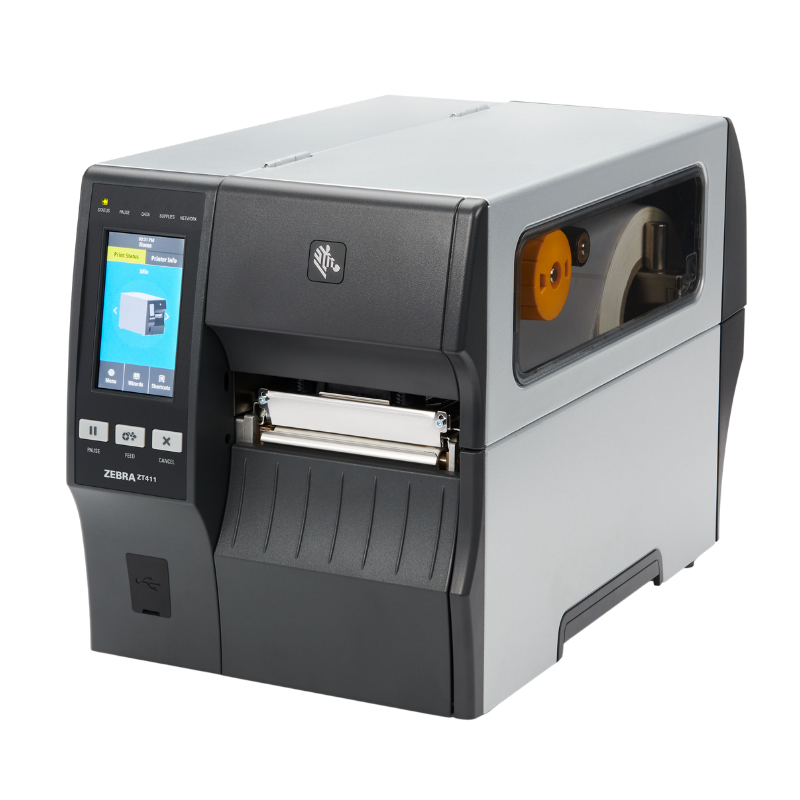
The choice mirrors the standard range. Desktop RFID models suit lower volumes and a bench; industrial RFID models suit production lines encoding continuously.

Because RFID media is expensive, encoding reliability matters more than raw speed. An industrial unit that fails fewer tags can be cheaper to run despite the higher purchase price.

Tell us the tag volume and what you are labelling and we will confirm the right configuration.

Hardware Selection Support

Not sure which model is right?

Send us what you are trying to do and we will come back with a specific recommendation rather than a catalogue. If you are replacing equipment, a model number or a photo of the existing setup is usually enough to work from.

  • Solutions experts on staff to answer your hardware questions
  • 30 day return policy, excluding consumables
  • In-stock items ship same day when ordered by 4:00pm Eastern
  • Volume and multi-location pricing reviewed on request

Ask a Question

We usually respond within 10 minutes on weekdays.

We use your details to answer your enquiry and nothing else.